Category: Future

QR Code

QR Code

QR Code

A QR Code is a matrix code (or two-dimensional bar code) created by Japanese corporation Denso-Wave in 1994. The “QR” is derived from “Quick Response”, as the creator intended the code to allow its contents to be decoded at high speed.

QR Codes are common in Japan, where they are currently the most popular type of two dimensional codes. Moreover, most current Japanese mobile phones can read this code with their camera.

Although initially used for tracking parts in vehicle manufacturing, QR Codes are now used in a much broader context, including both commercial tracking applications and convenience-oriented applications aimed at mobile phone users (known as mobile tagging).

QR Codes storing addresses and URLs may appear in magazines, on signs, buses, business cards or just about any object that users might need information about including items in stores. Users with a camera phone equipped with the correct reader software can scan the image of the QR Code causing the phone’s browser to launch and redirect to the programmed URL. This act of linking from physical world objects is known as a hardlink or physical world hyperlinks. Google’s cellphone OS Android heavily uses QR codes.

Users can also generate and print their own QR Code for others to scan and use by visiting one of several free QR Code generating sites. QR codes and RFID, are leading technology to enable the “Internet of Things” which some believe will be a huge growth phase for the Internet. The “Internet of Things” is a vision where physical world objects link to cyberspace and cyberspace to the physical world.

VN:F [1.8.2_1042]
Rating: 10.0/10 (1 vote cast)
VN:F [1.8.2_1042]
Rating: +1 (from 1 vote)

DIY RFID Implant

Video of a person with a do it yourself RFID implant.

VN:F [1.8.2_1042]
Rating: 1.0/10 (1 vote cast)
VN:F [1.8.2_1042]
Rating: -1 (from 1 vote)

How smart can MetroCards become?

Use your MetroCard to buy coffee, groceries or gas. This could be the future when the MTA introduces a no-swipe smart card system, which is expected by 2014. New MTA chief Jay Walder helped create London’s popular no-contact Oyster card and is looking to create a variation of it here.

There are a lot of possibilities to consider.
One versatile option is used in cities like Hong Kong, Singapore and Kaohsiung City in Taiwan where riders use their transit cards to shop at convenience and grocery stores, cafes and gas stations.

Neysa Pranger, spokesperson for Regional Plan Association, thinks it’s likely that New Yorkers can look forward to a similar system here.

Source: metro.us

VN:F [1.8.2_1042]
Rating: 9.0/10 (2 votes cast)
VN:F [1.8.2_1042]
Rating: +2 (from 2 votes)

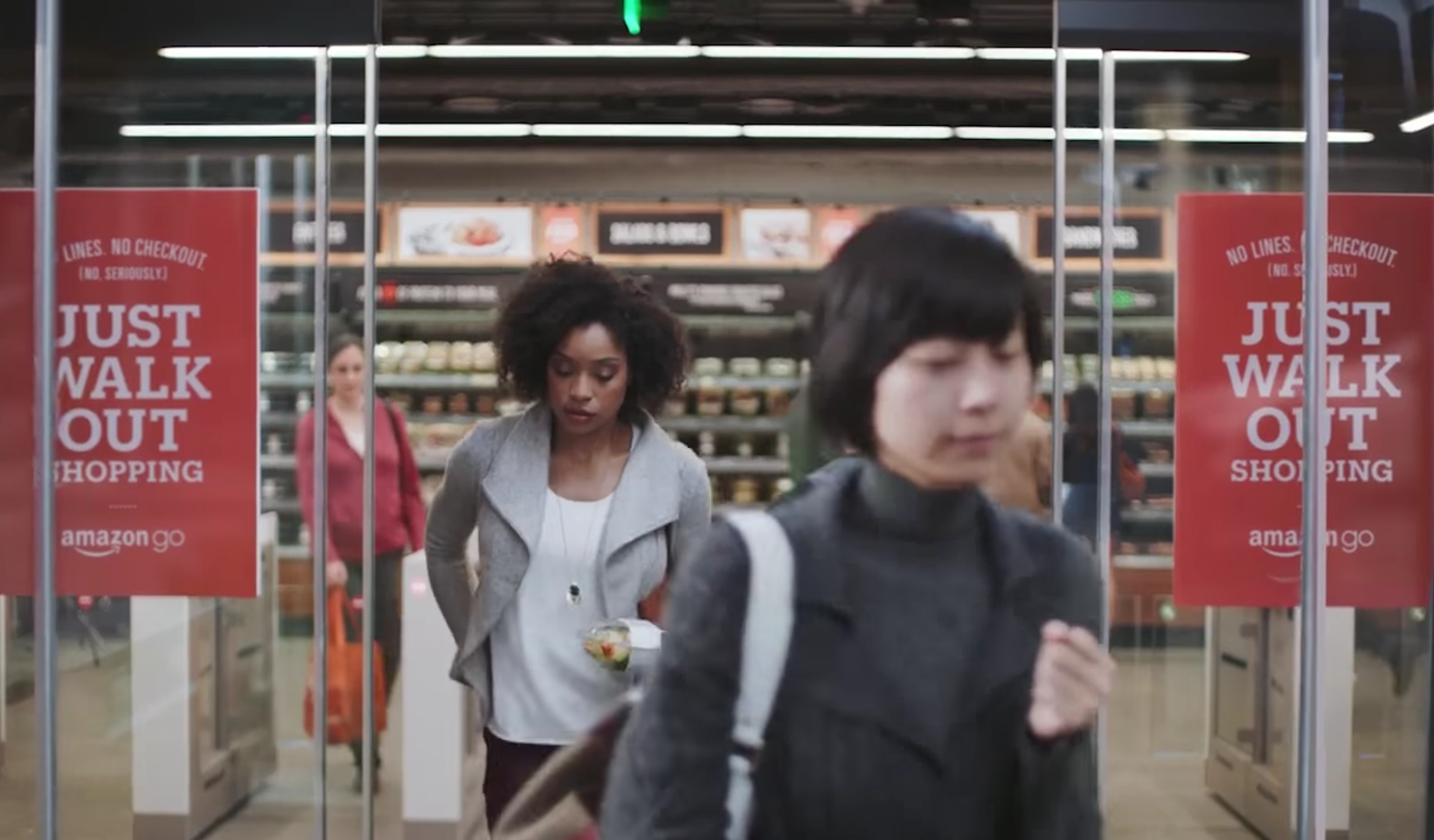
Smarter shopping

NOTHING, you’d think, would be more dynamic or up-to-the-minute than how we buy and sell. From the early Greek agoras to the modern superstore, markets have always been the most sensitive barometers of economic and societal change.

However, today’s retail model is struggling. It’s still largely a system built for the realities of an earlier era—a linear, push-based process where products are manufactured in isolation and put into market en masse from factory to truck to store, for customers who do the majority of their shopping in suburban malls.

Global retail today sees lead times as long as six to 10 months, forcing vendors to make significant bets on inventory, consumer trends and distribution methods—bloating supply chains with a stockpile of $1.2 trillion in excess merchandise.

At the same time, retailers lose a staggering $93 billion in missed sales every year, simply because they don’t have the right products in stock to meet customer demand. And that demand is more demanding and immediate than ever before: in the US, over 92 percent of adults conduct research online and seek the opinions of others before they ever purchase a product from a store.

To do business with shoppers on a smarter planet, retailers and manufacturers need a smarter system, one that bends retail’s global supply chain to these new realities. It needs to be interconnected, so the system can be fed by customer insight at every point in the process—all the way from design to distribution. It needs to be instrumented, so every item of inventory can be tracked and accounted for. And it needs to be intelligent, so vast amounts of customer data can be analyzed and turned into real value in real time.

The German Metro Group, one of the largest and most international retailing companies in the world, has introduced RFID technology throughout its entire supply chain, to help them get the products its customers want on the shelves when they want them. And top clothing designer Elie Tahari has built an inventory-reporting platform that’s helped it better match its products to customer demand.

By building intelligence into our entire retail system, retailers, manufacturers and suppliers can eliminate inefficiency and waste at every step of the chain—crucial in the current economic downturn. Even more important, retailers can better serve the new breed of empowered consumer, whose needs for high-value, individual service and low prices will only grow.

Source: businessmirror.com.ph

VN:F [1.8.2_1042]
Rating: 10.0/10 (2 votes cast)
VN:F [1.8.2_1042]
Rating: +2 (from 2 votes)

Samsung develops RFID chip for mobile handsets

Samsung Electronics has developed an RFID (radio frequency identification) chip it hopes will turn mobile phones into more useful tools to tell people about the products and services they want.

Samsung’s principal innovation in this area has been to design an RFID reader chip that can read different types of RFID tags. Normally, it takes more than one chip to read different kinds of RFID tags. The new chip will one day find its way into handheld devices, such as mobile phones, although the company did not say when that would happen.

When it does, people will be able to read RFID tags on products and other items meant to make the world an easier place to navigate. For example, some RFID tags on food or medicine products might give information on ingredients or dosages, while RFID tags at bus stops can offer schedules or tell when the next bus will arrive.<

The usefulness of RFID chips will grow as more companies put information on RFID tags and other devices meant for the technology. In Taiwan, for example, one local mobile network operator plans to work with movie theaters to put movie times on RFID tags in movie posters, so people can check on times while riding the subway or in popular shopping areas.

RFID technology is still in the early stages of use, a spokeswoman for Samsung in Seoul said, and Samsung currently has no timeline for when the RFID reader chips might enter mass production. The company plans to wait until RFID technology is more mature, she said.

Source: ARN

VN:F [1.8.2_1042]
Rating: 6.5/10 (2 votes cast)
VN:F [1.8.2_1042]
Rating: +2 (from 2 votes)

Are RFID tags leading to a surveillance culture?

Radio frequency identification chips are already widely used in supermarkets and shops for the purpose of stock control, but some people fear their use could be widened to monitor the habits and behaviour of ordinary citizens. At the moment, these tags, which are little bigger than a grain of sand, are embedded into pints of milk and library books. When paired with an RFID reader, the tags can help to provide detailed information about items, such as their location, or how many there are.

Although most people are happy for RFID tags to be used in stores to monitor stock levels, they’re less happy about the idea of the chips still sending out a signal once they leave the shop. On a benign level, such tracking capabilities would mean a store would know that people in Hertfordshire prefer blue cashmere jumpers, while those in Aberdeen favour the brown versions. But on a more sinister level, it could also enable them to glean an unprecedented insight into our personal lives, and target their brands to us accordingly.

To those people who fear a “surveillance culture”, the ability to tag and track everything from our food to our clothes would be the next step on an already slippery slope.

Source: Big Brother is Watching You

VN:F [1.8.2_1042]
Rating: 0.0/10 (0 votes cast)
VN:F [1.8.2_1042]
Rating: +1 (from 1 vote)

IBM SmartStore Commercial

VN:F [1.8.2_1042]
Rating: 1.0/10 (1 vote cast)
VN:F [1.8.2_1042]
Rating: -1 (from 1 vote)

Shopping in 1999

Clip from the 1967 film 1999 A.D. in which we see the family of the future shopping, paying bills, and using electronic mail from home.

VN:F [1.8.2_1042]
Rating: 9.0/10 (2 votes cast)
VN:F [1.8.2_1042]
Rating: 0 (from 2 votes)

You are being watched

With hidden cameras seemingly everywhere and RFID tags increasing, what are the implications for our lives?

David Lyon is studying the ceiling in an Ottawa coffee shop, searching for hidden cameras. A leading figure in the fast-growing field of surveillance studies, the Queen’s University sociologist is only too aware of the many ways we’re all being watched.

Closed-circuit TV cameras, like the ones likely concealed in the coffee shop ceiling, are among the most common. Since 9/11, their use has exploded worldwide. Britain now has an estimated 4.2 million CCTV cameras — one for every 14 citizens. People in central London are now caught on camera about 300 times a day.

CCTV cameras is just one surveillance tool. Others include radio frequency identification (RFID) chips, GPS location trackers, website cookies, facial recognition software and store loyalty cards. Computer programs used by security services can monitor and analyse billions of phone calls and e-mails in real time. We even make it easier for our trackers by willingly disclosing pieces of our lives on social networking sites like Facebook or in online contests and questionnaires.

“We are inadvertently handing over to centralized authorities an infrastructure of visibility the likes of which no society has ever seen before”. Surveillance technology can provide a safer and more productive world, but is this type of society really beneficial?

Read more: vancouversun.com

VN:F [1.8.2_1042]
Rating: 0.0/10 (0 votes cast)
VN:F [1.8.2_1042]
Rating: 0 (from 0 votes)

Wising up to smart phones

With smartphones today, we can check what is on the movies and paying for admission. Looking up maps on the fly to find nearby stores and restaurants.

Smartphones come with Internet access and range of clever applications and this is changing the way we shop.

The growing popularity of Web-enabled smart phones do far more than simply send text messages and make calls. Consumers increasingly have access to a world of information at their fingertips, and at the moment they’re making buying decisions.

Software developers are responding by introducing new cell phone programs that help compare prices or list coupons, and retailers are also working to adapt.

Since the iPhone’s debut two years ago, other manufacturers have introduced similar models and Google has introduced a new operating system called Android for smart phones.

Of the roughly 270 million cell phones in use in the U.S. today, smart phones make up around 13 percent, but annual smart phone sales are projected to double by 2013.

Smart phones will increasingly and seamlessly merge with Smart stores to assist in connecting consumers with products and services that they want, when they want. Currently the door is wide open for developers with vision and execution to fulfill the needs of smart consumers and early adopters of technology that is useful to them. This trend will give rise to many innovative services and programs on smart phones which could turn out to be a huge business opportunity for developers.

VN:F [1.8.2_1042]
Rating: 0.0/10 (0 votes cast)
VN:F [1.8.2_1042]
Rating: 0 (from 0 votes)

WordPress Themes

7 visitors online now
7 guests, 0 members
Max visitors today: 7 at 06:28 pm GMT+4
This month: 7 at 03-11-2010 06:28 pm GMT+4
This year: 22 at 01-06-2010 06:44 am GMT+4
All time: 22 at 01-06-2010 06:44 am GMT+4