Smartphones Heralding New Era of Smart Shopping

Three years after the launch of the first iPhone, the advent of “mobile connectivity” is profoundly shaking up the way consumers shop, according to new research from PriceGrabber.co.uk(R). Not just online, but in stores too, as a growing army of ‘smart shoppers’ are arriving in stores equipped with Internet enabled Smartphones.

Whilst these devices might be small, they still have the capacity to spend big. Of the 908 online shoppers that were asked about their mobile shopping habits, 66 percent owned a Smartphone or another Web-enabled phone. Of the consumers who shop from their mobile, nearly half (48 percent) claim that the convenience of having the Internet with them wherever they go is their number one reason for smart shopping.

PriceGrabber.co.uk’s research found that of the consumers that own a Web-enabled mobile phone:

  • 24 percent compare or check prices from their mobile phone
  • 22 percent research product details and specifications from their Mobile phone
  • 16 percent purchase online from their mobile phone
  • 9 percent check product availability
  • 5 percent access online discount vouchers
VN:F [1.9.3_1094]
Rating: 0.0/10 (0 votes cast)
VN:F [1.9.3_1094]
Rating: 0 (from 0 votes)
Posted in Mobile, Shoppers. No Comments »

Store of the Future

VN:F [1.9.3_1094]
Rating: 6.0/10 (1 vote cast)
VN:F [1.9.3_1094]
Rating: 0 (from 0 votes)

Smarter shopping

NOTHING, you’d think, would be more dynamic or up-to-the-minute than how we buy and sell. From the early Greek agoras to the modern superstore, markets have always been the most sensitive barometers of economic and societal change.

However, today’s retail model is struggling. It’s still largely a system built for the realities of an earlier era—a linear, push-based process where products are manufactured in isolation and put into market en masse from factory to truck to store, for customers who do the majority of their shopping in suburban malls.

Global retail today sees lead times as long as six to 10 months, forcing vendors to make significant bets on inventory, consumer trends and distribution methods—bloating supply chains with a stockpile of $1.2 trillion in excess merchandise.

At the same time, retailers lose a staggering $93 billion in missed sales every year, simply because they don’t have the right products in stock to meet customer demand. And that demand is more demanding and immediate than ever before: in the US, over 92 percent of adults conduct research online and seek the opinions of others before they ever purchase a product from a store.

To do business with shoppers on a smarter planet, retailers and manufacturers need a smarter system, one that bends retail’s global supply chain to these new realities. It needs to be interconnected, so the system can be fed by customer insight at every point in the process—all the way from design to distribution. It needs to be instrumented, so every item of inventory can be tracked and accounted for. And it needs to be intelligent, so vast amounts of customer data can be analyzed and turned into real value in real time.

The German Metro Group, one of the largest and most international retailing companies in the world, has introduced RFID technology throughout its entire supply chain, to help them get the products its customers want on the shelves when they want them. And top clothing designer Elie Tahari has built an inventory-reporting platform that’s helped it better match its products to customer demand.

By building intelligence into our entire retail system, retailers, manufacturers and suppliers can eliminate inefficiency and waste at every step of the chain—crucial in the current economic downturn. Even more important, retailers can better serve the new breed of empowered consumer, whose needs for high-value, individual service and low prices will only grow.

Source: businessmirror.com.ph

VN:F [1.9.3_1094]
Rating: 10.0/10 (2 votes cast)
VN:F [1.9.3_1094]
Rating: +2 (from 2 votes)

IBM SmartStore Commercial

VN:F [1.9.3_1094]
Rating: 1.0/10 (1 vote cast)
VN:F [1.9.3_1094]
Rating: -1 (from 1 vote)

The store of tomorrow

VN:F [1.9.3_1094]
Rating: 0.0/10 (0 votes cast)
VN:F [1.9.3_1094]
Rating: 0 (from 0 votes)

Future Store Demo

Video of the services that Future Store in Germany offers.

VN:F [1.9.3_1094]
Rating: 0.0/10 (0 votes cast)
VN:F [1.9.3_1094]
Rating: 0 (from 0 votes)

Smart Shopping

Ed Hill from Intel’s Embedded Communication Group shows a internet-connected kiosk and cash register for retail stores. These could help shoppers find exactly what they didn’t know they were looking for, order items, and have them shipped from the store, and even pay using their smart phone.

VN:F [1.9.3_1094]
Rating: 0.0/10 (0 votes cast)
VN:F [1.9.3_1094]
Rating: 0 (from 0 votes)

NTT combines Java & RFID, for loyalty cards

NTT Communications has begun trials of a high-tech alternative to loyalty cards that promises to simplify their use.

Loyalty cards are big business and are often handed out to customers when they have made a purchase. Consequently, people end up with wallets stuffed with too many cards.

When cell phone carriers began rolling out electronic wallet services a few years ago some retailers offered shoppers the ability to keep their points in a Java applet inside their phones rather than a physical card. But this too has led to clutter in the form of a phone full of applications, one for each store.

The NTT technology, called “Gyazapo,” hopes to simplify this by bringing together loyalty cards in one application. It too is a Java applet and can be used in phones that also include short-range RFID technology. Most current phones support the technology.

Trials began this week at major Japanese electronics retailer Bic Camera and will also be tried over the next few months at two other retailers.

VN:F [1.9.3_1094]
Rating: 0.0/10 (0 votes cast)
VN:F [1.9.3_1094]
Rating: 0 (from 0 votes)

Smartphones & smartstores

The mobile phone will inevitably be an important component for smartstores.

Stores that in build intelligence in their infrastructure using RFID with hardware such as smartshelves and smartcarts will need to embrace smartphones to take full advantage for servicing their customers. If customers are carrying around a communications device that can display information, images, and video, then why not use it?

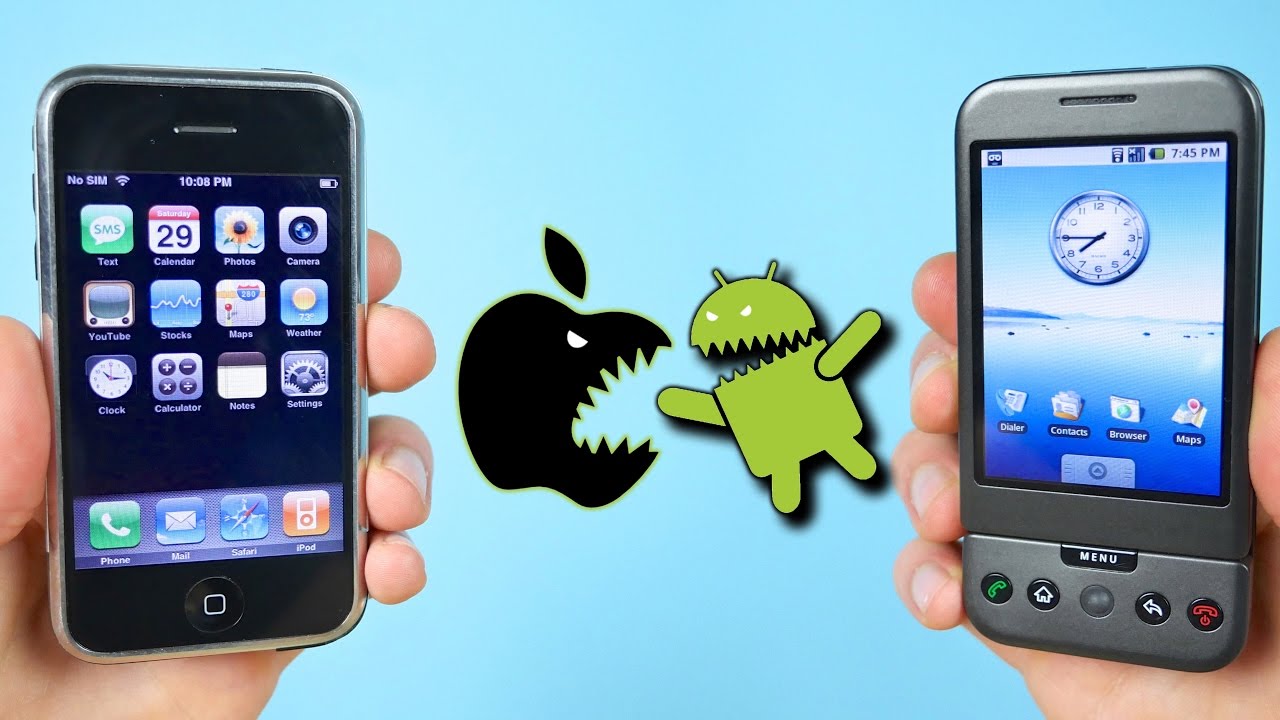
In the smartphone market, it could turn out to be a three way race for platform choices. i.e., the iPhone, Windows Embedded, and Android.

This looks very similar to another three way race that has already taken place in the console market. i.e., PlayStation, Xbox, and Wii.

Using the lessons learned from that market, could we predict the outcome of the smartphone platform market? If we assume that Windows Mobile is most like the Xbox, the iPhone like the PlayStation 3, and Android as Wii, then it would mean that the smartphone platform with the most users will be Android.

Windows Mobile is like Xbox because apart from being the creation of the same company, they are both proprietary and similarly priced around the middle of the market. I liken the iPhone to PlayStation3 because they are both highly polished and proprietary, but both are at the higher end of the market. Lastly, I compare Android and Wii similary because they are both the lower end of the market with less hardware features needed to run them. In other words they are both the lighter of the 3 options in their respective markets.

So my money in the smartphone platform market is on Android. I think it will take the lion share of the market just as Wii has taken the biggest slice of the console market.

Android also has other big advantages, listed below:

  • It is free.
  • It is open.
  • It is friendly toward developers with great tools and emulators.
  • It is extremely light, so that it can run on medium end cellphones and scale up to laptops.
  • It has the biggest Internet brand promoting it, (Google).

Android

Android

With this prediction coupled with developments in retail and smartstore technology, it is a good bet that Android will feature many apps that interact with smartstores to enable all kinds of services and information to make the shopping experience one of interactive services, better communication, greater service, quicker purchasing time, and a more efficient way to hunt out bargains and specials. Supermarkets could get involved and create their own Android apps with names like “Specials of the week” to attract customers into their stores.

Keep an eye out for Android over the coming years. Perhaps in about 5 years when you find yourself scanning
a product in your local smartstore with your Android smartphone, you will be able to think how much the retail experience has changed in such a short time.

VN:F [1.9.3_1094]
Rating: 0.0/10 (0 votes cast)
VN:F [1.9.3_1094]
Rating: 0 (from 0 votes)

Is this how we will shop in a couple of years?

VN:F [1.9.3_1094]
Rating: 6.0/10 (1 vote cast)
VN:F [1.9.3_1094]
Rating: 0 (from 0 votes)