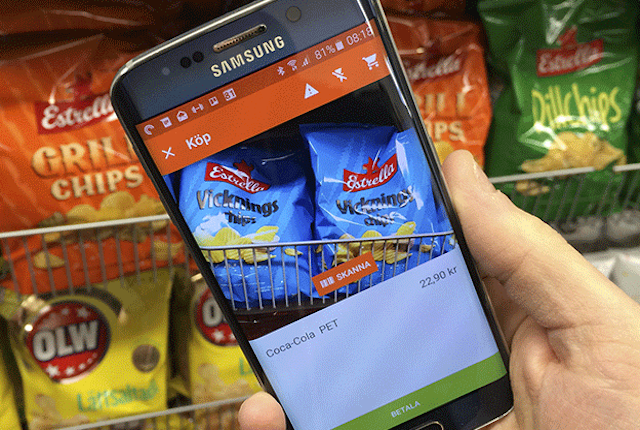

As more companies look to manage their costs, the indirect and MRO spend areas are getting a much closer look than ever before. While the total dollar amount may not be as large as the direct materials spend, the lack of consolidation can provide good opportunity for spend management ROI.
One company reaping the benefits of MRO controls is Alpharetta, Ga.-based Intelligent Switchgear Organization (ISO), a joint venture between Caterpillar and Eaton Corp, that manufactures, sells, and services electric power generation equipment. Prior to implementing its control program, ISO worked with Fastenal, a distributor of fastenings and MRO supplies. Under the plan at the time, ISO had open bins for MRO items that Fastenal restocked each week and then invoiced ISO for. The open bins allowed virtually any and all employees to take free issue items as they wished.
“From what we saw, they did just that, and there was very little control,” reports J. David Lister, purchasing manager. Items included safety glasses, ear plugs, side shields, drill bits, arm sleeves, box cutters and screwdrivers.
ISO decided that it wanted to determine what if any cost reductions it could receive by actually tracking usage of MRO items down to the individual employee. Fastenal had a solution that seemed to be able to do just that called SmartStores. These are vending machines manufactured by Fastenal that the company leases to its customers. “They are like food vending machines, except that they are stocked with the operational items that we use the most,” reports Lister.
Canadian Tire Corp. Ltd. yesterday officially introduced its new Smart Store concept to Quebec, an initial $17-million investment.
The iconic national automotive and housewares chain has converted five local stores to the format, designed to make them more customer friendly and productive through renovations and reorganization.
Company president and chief executive officer Stephen Wetmore was in town to celebrate the grand reopening of those outlets, in Notre Dame de Grâce, St. Léonard, St. Laurent, Dollard des Ormeaux and Delson.
“Since opening our first (Quebec) store in Rouyn-Noranda in 1939, we have been focused on making continued investments in the Quebec market to ensure customers have the best possible shopping experience,” Wetmore said.
“The Smart Store represents the next phase of renewal. We are pleased to celebrate the grand opening of five Smart Stores in Montreal, and another two in the province (Alma and Sept Îles) next week.”
The company’s goal is to switch 110 of its 495 dealer-run stores (95 of them in Quebec) across the country by the end of 2010.
Since unveiling the concept, which won of a Retail Council of Canada award of excellence, 25 Canadian Tire stores have adopted the changes.
With hidden cameras seemingly everywhere and RFID tags increasing, what are the implications for our lives?
David Lyon is studying the ceiling in an Ottawa coffee shop, searching for hidden cameras. A leading figure in the fast-growing field of surveillance studies, the Queen’s University sociologist is only too aware of the many ways we’re all being watched.
Closed-circuit TV cameras, like the ones likely concealed in the coffee shop ceiling, are among the most common. Since 9/11, their use has exploded worldwide. Britain now has an estimated 4.2 million CCTV cameras — one for every 14 citizens. People in central London are now caught on camera about 300 times a day.
CCTV cameras is just one surveillance tool. Others include radio frequency identification (RFID) chips, GPS location trackers, website cookies, facial recognition software and store loyalty cards. Computer programs used by security services can monitor and analyse billions of phone calls and e-mails in real time. We even make it easier for our trackers by willingly disclosing pieces of our lives on social networking sites like Facebook or in online contests and questionnaires.
“We are inadvertently handing over to centralized authorities an infrastructure of visibility the likes of which no society has ever seen before”. Surveillance technology can provide a safer and more productive world, but is this type of society really beneficial?
The Internet has quickly become a meaningful selling channel in its own right, one that is replacing catalogs and is the biggest retail channel besides store based shopping. Technology and lessons from tracking best practices at retail web sites has the potential to enhance store-based shopping. It is inevitable that the distinction between store based shopping and Internet shopping becomes blurred as each channel incorporates ideas and successes from each. In time stores will become smart stores and web sites will incorporate retail services to give you a seamless experience in shopping.
Just what each channel will embrace with trial and error is anyones guess. It does seem possible that we may eventually end up with a single service that incorporates both real stores and virtual stores using a mix of smart technology in hardware with useful data and online services.
Nokia kicks off the 2009 Mobile World Congress in Bacelona with the announcement of the Ovi Store, an application store that blends media with social networking and location-based services, akin to Google’s Latitude application. Ovi already boasts partners such as Facebook, MySpace and game publisher Electronic Arts.
Nokia Executive Vice President Tero Ojanperä used a keynote address to do just that, with the announcement of Ovi, an application store that “learns” users’ preferences and uses location and social networking to personalize the experience. Nokia says Ovi will be accessible to about 50 million people immediately upon its launch in May.
3 visitors online now 3 guests, 0 members Max visitors today: 6 at 09:06 am GMT+4 This month: 6 at 03-07-2010 03:21 am GMT+4 This year: 22 at 01-06-2010 06:44 am GMT+4 All time: 22 at 01-06-2010 06:44 am GMT+4